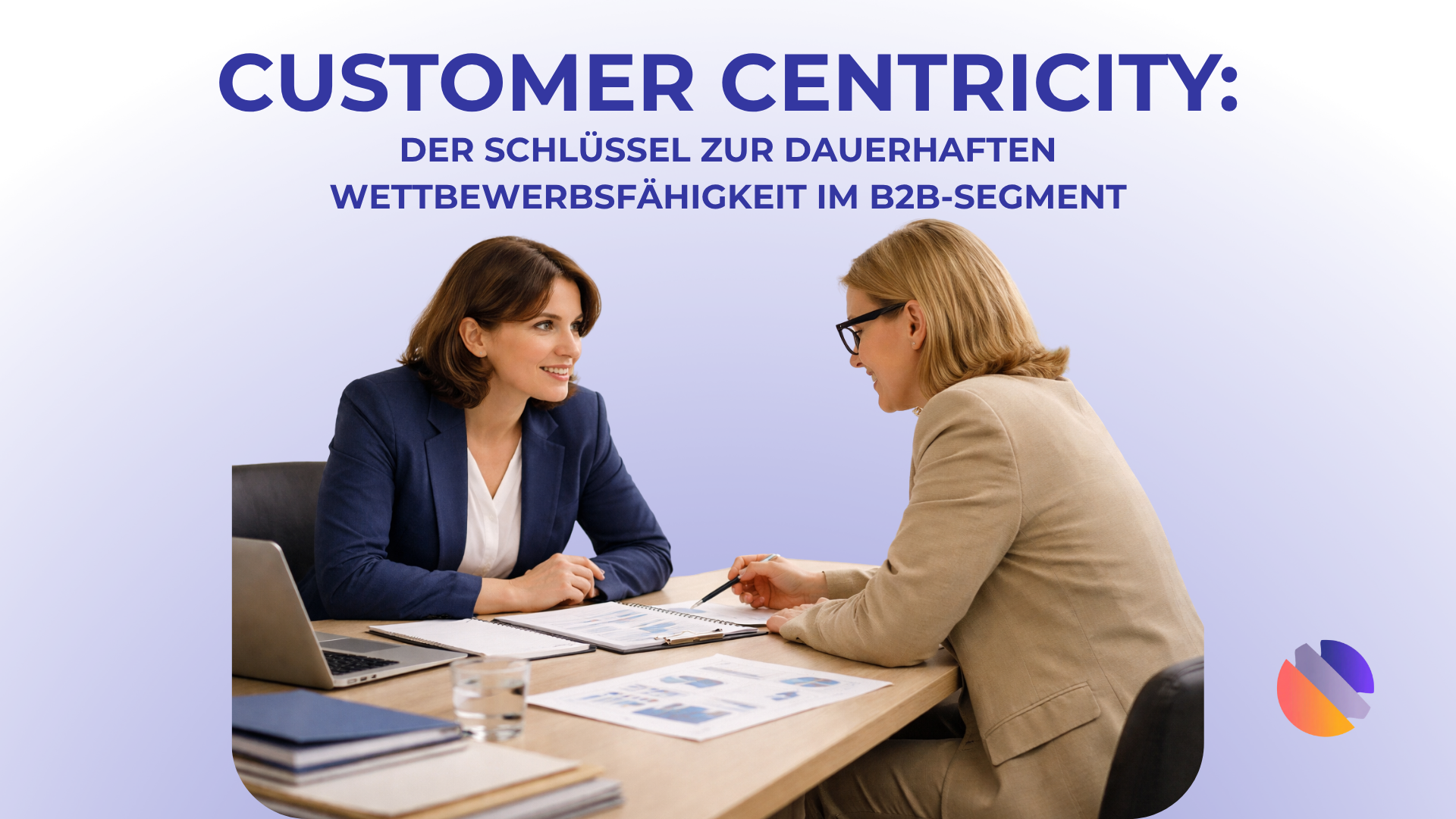
Real competitive advantage in B2B does not come from price or product, but from a deep understanding of customer needs across the entire customer journey.
In an increasingly globalized and technology-driven business world, the question arises how companies can hold their ground over the long term. The answer lies in a strategic realignment toward customer centricity. For B2B companies as well as revenue and go-to-market teams, customer centricity is far more than a superficial understanding of the customer. It is the fundamental engine for strengthening customer loyalty and securing sustainable business success.
Customer Centricity as a Strategic Differentiator
Companies that focus on price or product quality alone risk operating in interchangeable markets. Real competitive advantage comes from a deep understanding of customer needs, that is, from seeing customers as partners whose success also drives your own. Go-to-market teams should therefore not only pursue short-term sales targets, but optimize the entire customer journey, from acquisition through the buying process to long-term support.
Personalization as a Growth Factor
Business customers increasingly expect tailored solutions that address their specific requirements directly. Personalization is the key here. With the help of data-driven tools and CRM systems, revenue teams gain deep insights to tailor sales strategies and product development individually to the customer. This not only improves the customer experience, it also increases customer lifetime value, since satisfied customers are more inclined to make further purchases.
Long-Term Loyalty Through Added Value
Customer centricity not only increases the likelihood of purchase, it also fosters long-term loyalty. Companies with a strong customer-centric approach understand the customer lifecycle as a continuous process of value creation and offer concrete added value at every stage. This encourages repeat purchases, positive recommendations and community feedback. Those who are perceived as a solution provider rather than a mere seller benefit from a stable customer base that drives growth and resilience even in volatile markets.
Putting Customer Centricity Into Practice
Practical implementation begins with a sustainable system for collecting and analyzing customer data, because this information is the basis for personalization and optimization. Interdisciplinary teams from sales, marketing and service ensure consistent customer communication and break down internal silos.
Customer feedback should systematically feed into product development and process improvement, so that customers feel their opinion counts. Technology such as CRM systems with a 360-degree view of the customer simplifies interaction without losing the personal touch.
Conclusion
In the B2B space too, customer centricity offers potential that goes far beyond the financial dimension. The strategic focus on individual needs and long-term relationships strengthens not only competitiveness, but also the durability of a company. Integrating customer centricity into all business functions is the key to sustainable value creation and should be understood as an indispensable element of corporate strategy.