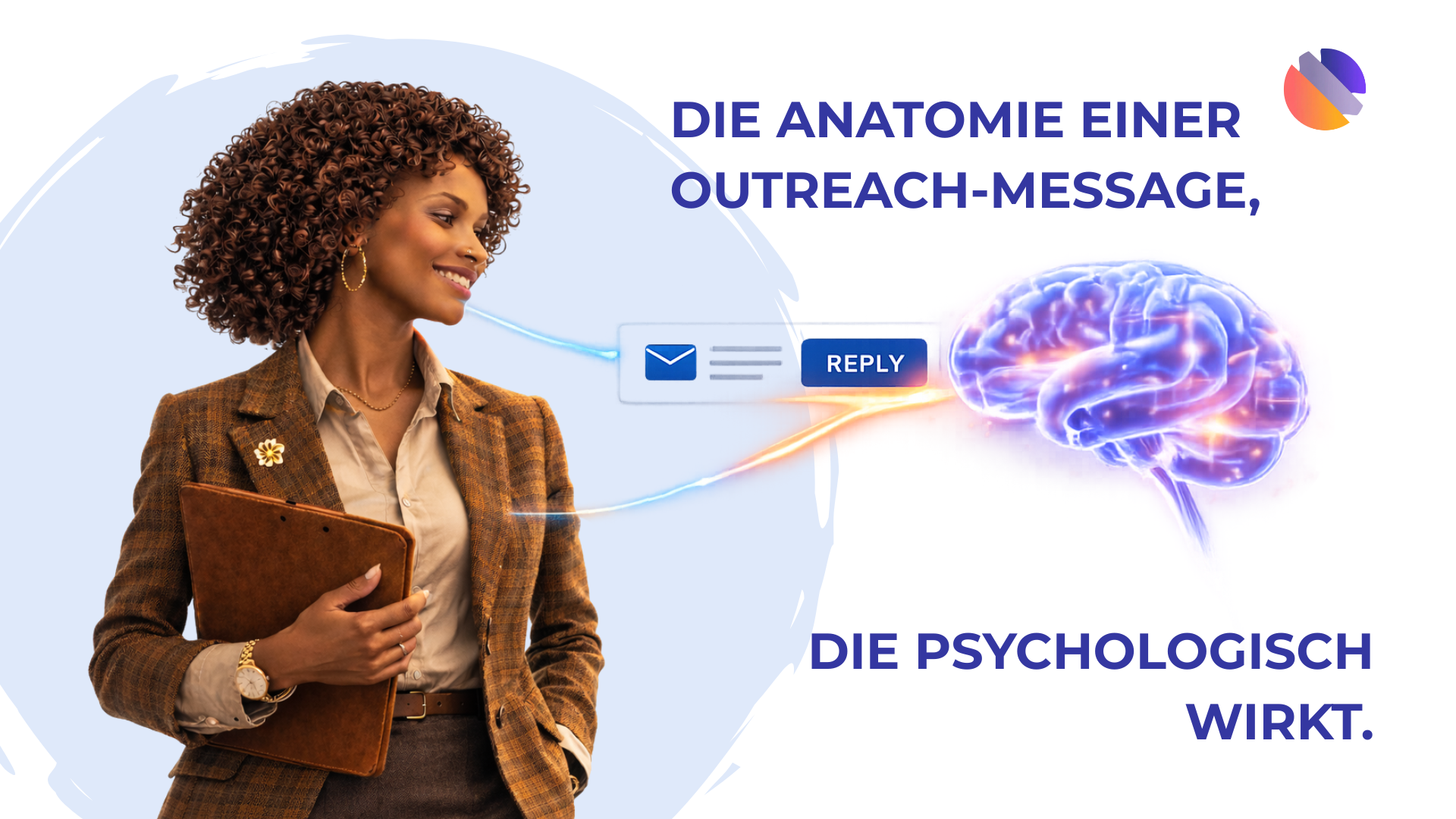
An effective message is not born from creativity, but from diagnosis. Four building blocks decide whether outreach creates relevance: motive triggers, word choice, timing and a clear next step.
Many teams optimize copy: subject lines, hooks and calls to action. That is useful, but not enough. An effective message is not born from creativity, but from diagnosis.
Motive Triggers
Every role responds to different drivers: security, growth, efficiency, status or control. Anyone who misses the dominant motive trigger creates no relevance. A CFO reads differently than a head of sales, a founder differently than a corporate manager. Psychological segmentation goes beyond demographics.
Word Choice and Framing
Words activate images. "Cut costs" lands differently than "make budgets more predictable". "More leads" lands differently than "prioritize conversation-ready contacts". Precise language signals understanding, generic language signals mass outreach.
Timing
A perfect message at the wrong time stays ineffective. Relevant timing is based on budget cycles, strategic initiatives, personnel changes as well as product or market shifts. Outreach without timing logic is a pure volume game.
A Clear Next Step
Many messages end with open questions and no context. A psychologically effective message reduces cognitive load and proposes a clear, small next step. Not "Do you have time for a call?", but: "Does it make sense to spend 20 minutes checking whether your current leads are already conversation-ready?"
From Copy Optimization to Matching
What matters is not the perfect wording, but the matching of profile, context and message. This is exactly where conversion happens. The decisive question is therefore: how well do we understand our counterpart's motivation and situation before we write?