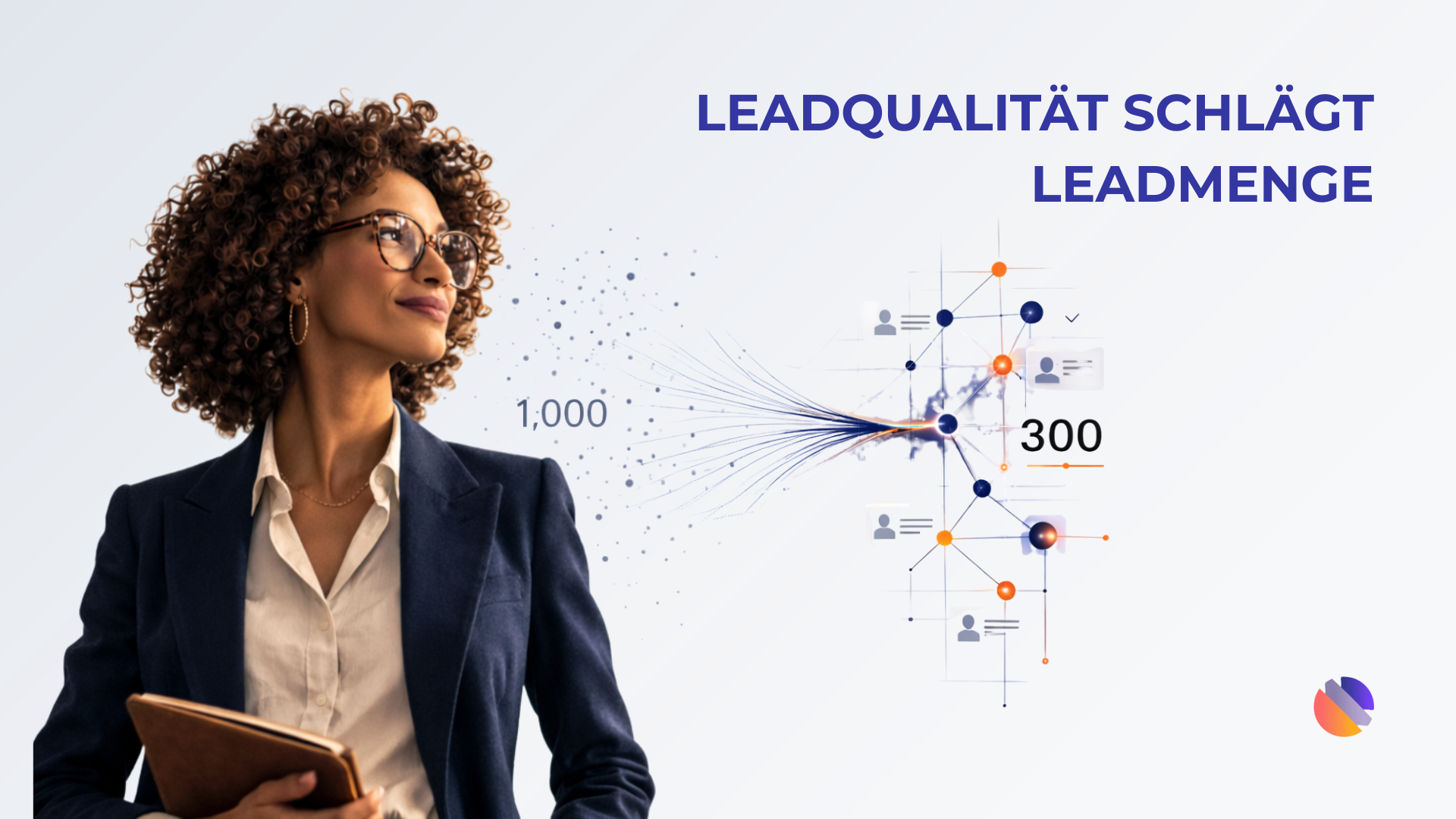
Lead volume has long stopped being a bottleneck, but relevance still is. Those who start before the funnel and prioritize conversation readiness over sheer quantity achieve more impact with fewer contacts.
More leads are no longer a bottleneck. Every team can buy lists, enrich data and automate campaigns today. Volume has become scalable. Relevance has not.
The real problem begins before the first contact. Companies invest budget in audiences that have no context yet. They prioritize roles that cannot make decisions. They communicate messages that do not fit the situation. The result is activity without conversation: a lot of outreach, little response and even less real opportunity.
Lead Generation Is Not a Quantity Problem
In early go-to-market, the wrong decisions are made systematically: the wrong moment, the wrong role, the wrong trigger and the wrong tone. Not because teams work badly, but because decision logic is missing.
Lead scoring is often understood as a numerical ranking. But it is not about points, it is about probability: how likely is it that this contact turns into a meaningful conversation?
Conversation Readiness Instead of MQL
We do not work with the question of whether a lead is marketing-qualified, but with the question of whether it is ready for a conversation. Conversation-ready means that the context is understood, the need is anticipated and the outreach is aligned with profile and score. Only then does outreach make sense. Everything else produces wasted reach.
Fewer Leads. More Impact.
A cleanly prioritized pool of 300 leads is strategically more valuable than 3,000 unstructured contacts. The reason: sales does not work with data, it works with conversations. And conversations do not arise from volume, but from relevance.
Lead generation becomes effective when it starts before the funnel, that is, where the decision is made about who to approach at all and why. The operational question is therefore not how to increase our lead count, but by what logic we prioritize our market opportunities.