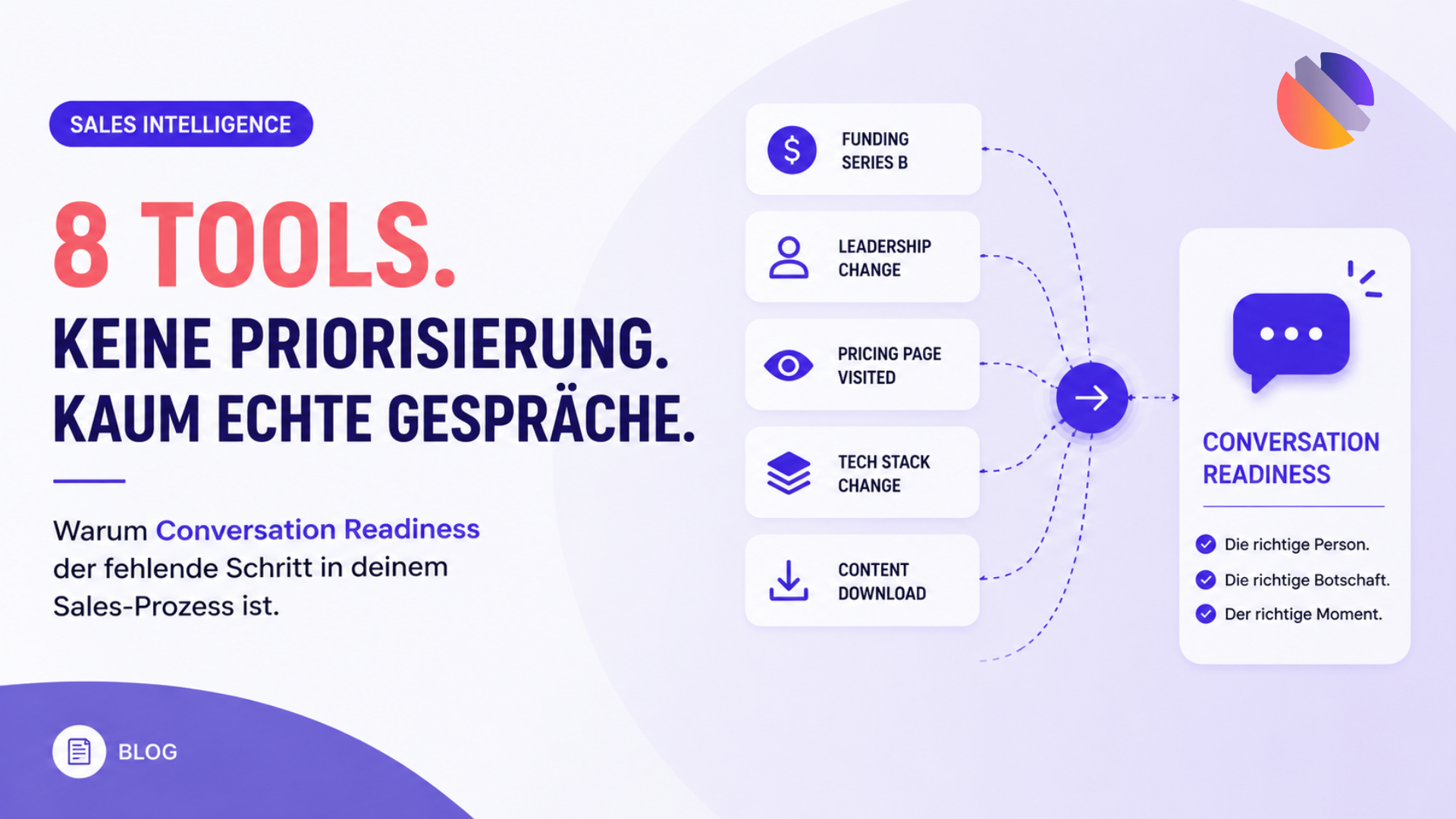
Inbound and outreach are often discussed as opposites in B2B sales. In fact, they fulfill different functions within the same system: inbound takes hold when readiness to buy already exists, outreach activates it through context and timing.
Inbound and outreach are often discussed as alternatives in B2B sales. Either you invest in content and wait for demand, or you go out actively and create conversations. This juxtaposition falls short. The relevant question today is no longer which channel is better, but when demand already exists and when it first has to be activated.
Inbound Takes Hold When Readiness to Buy Already Exists
Inbound works where buyers are already researching, where awareness of the problem exists and information is being actively sought. The Salesforce State of Sales Report 2026 shows that a large part of the buyer journey takes place before a conversation with sales even happens. Customers expect context, orientation and clear framing long before they reach out.
In this phase, inbound takes on two tasks: it makes complex offers understandable and filters who is really relevant. Well-made inbound reduces friction in the first contact. But it is slow and reacts to demand instead of steering it.
Outreach Becomes Relevant When Context Is Decisive
Outreach makes sense when readiness to buy is not visible through search queries. Many B2B decisions arise out of situations: new responsibility, regulatory pressure, an internal project or an external trigger. The same Salesforce report shows that sales teams are under massive capacity pressure. There is no time for broad cold calling, while customers expect highly relevant outreach.
Outreach therefore only works if it is context-based: clear target roles, clean signals and concrete points of connection. A good example is Mitigant. In a joint project, the focus was not on volume, but on timing. Outreach was triggered exclusively when accounts already showed regulatory or organizational change signals.
Why the Separation No Longer Works
Inbound and outreach are not competing disciplines. They fulfill different functions within the same system. Inbound builds orientation and generates signals. Outreach picks up these signals and translates them into conversations. High-performing teams use data to place outreach not earlier, but more accurately.
Conclusion
Inbound builds trust, outreach activates it. Those who think of the two separately give away impact. Those who orchestrate both increase relevance and reduce wasted reach.